-
3893 Military Trail Suite #23893 Military Trail Suite #2
-
info@medicusaesthetics.cominfo@medicusaesthetics.com
-
561‑624‑0123561‑624‑0123

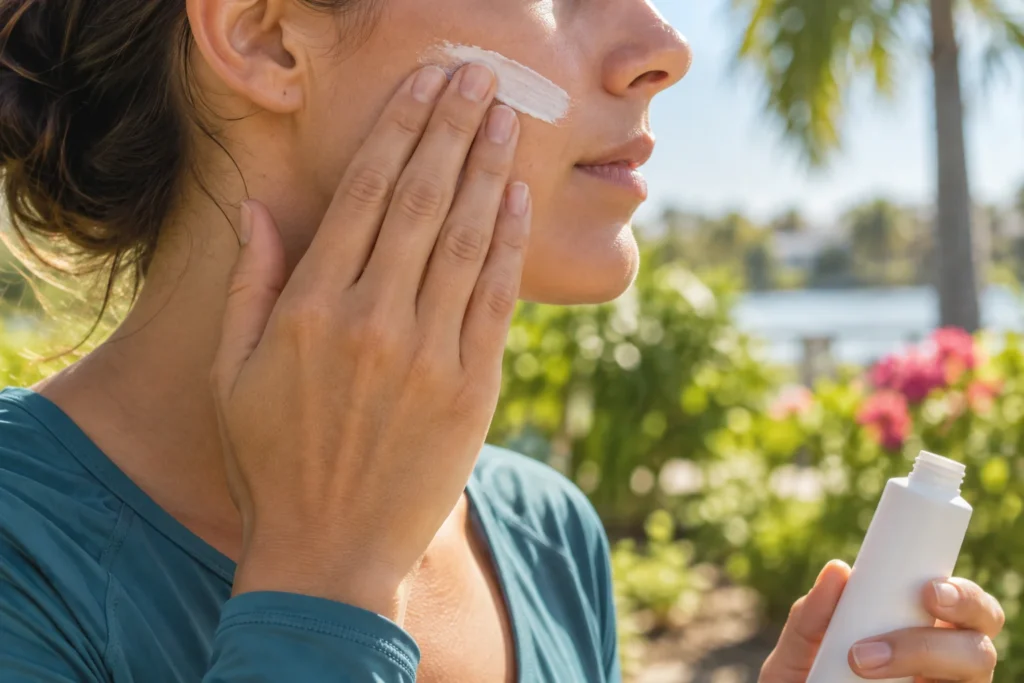
You may first notice uneven pigmentation in a photograph, while applying sunscreen, or when looking closely at the backs of your hands. It can be tempting to choose a treatment immediately. The better first step is to understand what the spots actually are.
Sun spots are a common cosmetic concern, but that everyday description is not a diagnosis. Different kinds of discoloration can look similar, and some spots need a dermatologist’s assessment before any cosmetic treatment is considered.
At Medicus Aesthetics in Jupiter, IPL photofacials are among the options described on the laser treatments service page. A useful consultation connects the treatment to your skin, recent sun exposure, health history, and goals. This guide explains what to ask, how to plan, and why protecting your skin remains part of the conversation throughout the year.
A consultation is easier when you can explain what you see and what bothers you. Is the concern a few separate marks, a broader area of uneven color, or discoloration that appeared after irritation? Are the spots on your face, neck, chest, or hands? When did you first notice them?
You do not need to name the condition yourself. A description such as “these flat marks have been here for years” or “this area became darker recently” gives a provider useful context without assuming a diagnosis.
The American Academy of Dermatology’s age-spot guidance explains that spots resembling age spots may be other skin conditions. It recommends a dermatologist’s skin examination before treating them. Fading a mark is not an appropriate substitute for finding out what it is.
Bring up any previous assessment. If a dermatologist has examined the area, explain when that happened and whether anything has changed since. If the spot has never been evaluated, say that too. It is reasonable for treatment planning to begin with an examination or referral rather than an appointment for a procedure.
New, changing, unusual, itching, or bleeding spots deserve medical attention. The AAD’s melanoma warning-sign guidance describes changes in shape, border, color, size, or appearance over time as reasons to seek a dermatologist’s assessment. A spot does not have to be large to warrant evaluation.
This does not mean every mark is dangerous. It means that appearance alone, especially in an online photo, cannot establish that a cosmetic treatment is the right next step.
Tell the provider if one spot looks different from the others or if you are unsure whether it has changed. Do not try to remove, bleach, or treat a concerning lesion at home while waiting to find out what it is.
You can want a more even-looking complexion and still need a skin-health assessment first. Those goals do not compete. Identifying the concern helps establish which conversation should come next.
Medicus Aesthetics is not described here as providing dermatology diagnosis or skin-cancer screening. For a suspicious spot, arrange evaluation with a qualified dermatologist. Once any needed medical assessment is complete, you can discuss appropriate cosmetic options.
IPL stands for intense pulsed light. It uses pulses of broad-spectrum light rather than the single wavelength associated with a laser. The categories may appear together on a service menu, but they are not interchangeable treatments.
The current Medicus service page describes IPL for visible pigmentation and redness, including possible improvement in the appearance of sun spots. It lists the face, neck, chest, and hands as treatment areas. That information establishes the offered service, not that every mark in those areas should be treated.
DermNet’s IPL overview explains that light energy is absorbed by target structures and that treatment selection depends on the concern. It also describes possible unwanted effects, including discomfort, burns, and changes in pigmentation. Settings, skin characteristics, and appropriate selection matter.
Ask what the provider expects IPL to address in your case. Is the goal to soften the appearance of identified benign pigmentation, address a different concern, or decide that another approach is more suitable? A treatment name is most helpful after that question has been answered.
Two people with similar-looking marks may need different recommendations. Share your natural skin tone, how your skin responds to sun, prior pigment changes, sensitivity, and any previous reactions to cosmetic treatments.
Explain what you currently use on your skin, including prescription products, exfoliating acids, retinoids, and recent home treatments. Bring a medication and supplement list. The provider should decide which details affect treatment planning and whether any changes are needed.
Useful history to discuss includes:
Do not stop prescribed medication or alter a skin-treatment regimen on your own. Ask who should coordinate changes if something needs to be adjusted.
An appropriate question is, “How do you decide whether this treatment is suitable for my skin tone and this type of pigmentation?” Listen for an explanation of assessment, limitations, and alternatives rather than a promise that one treatment works for everyone.
If you are told to wait or consider another route, ask why. Understanding the reason can help you make an informed decision instead of treating the delay as a setback.
In Jupiter, an October appointment can still fall between beach visits, boating, golf, outdoor work, or a family trip. A season on the calendar does not tell the provider how much sun your skin has received.
Describe recent exposure accurately, including tanning and sunburn. Mention self-tanning products as well, and ask how they affect preparation. Then look ahead: can you follow the recommended sun precautions after the planned session?
Do not assume a treatment is ready to proceed because a tan appears lighter. Ask the provider to assess your skin and give a specific timing recommendation. General online timelines cannot account for the treatment settings, your skin response, or the area involved.
A useful appointment discussion includes more than the date of a wedding or holiday photograph. Mention outdoor plans around that date, travel, work responsibilities, and whether you will have a chance to follow recovery instructions.
Write down the commitments that cannot move. The provider can then explain whether a treatment window is realistic, whether more lead time would be useful, or whether waiting makes better sense. Planning early gives you room to choose without relying on a last-minute result.
Describe the change you want in ordinary language. Perhaps you want certain marks to be less noticeable or your overall tone to look more even. That is a more useful starting point than requesting completely flawless skin.
Ask which parts of the concern may respond and which may remain. If a series is proposed, discuss why, how progress would be reviewed, and what would guide the decision to continue. There is no universal number of sessions that guarantees a particular result.
Photos can help you explain a concern, but comparison images have limits. Lighting, camera settings, makeup, and editing can change how pigmentation appears. Ask how your own response would be assessed under consistent conditions.
A cosmetic procedure does not remove the need for continued skin care and sun protection. Before deciding, ask what maintenance might involve and how future exposure could affect the concern.
Avoid choosing a provider based only on a dramatic before-and-after image. A clear explanation of suitability, risks, expected improvement, and follow-up is more relevant to your own decision.
Before any session, request instructions that apply to the actual treatment being proposed. Confirm what to do with your usual products, what to avoid, and whom to contact with questions. Ask whether you should arrive without makeup or other products on the treatment area.
It is also useful to understand the visit itself. Ask how eye protection is handled, what sensations to expect, and how the provider responds if something feels wrong. You do not need to select the equipment or settings yourself, but you should understand the process well enough to consent comfortably.
Recovery questions should be specific:
Follow the provided plan instead of adding a new exfoliant or trying to speed up fading. If you do not understand an instruction, ask for clarification before leaving. The goal is to reduce improvisation during recovery.
Sun protection is part of managing sun-related pigmentation, whether or not you proceed with a cosmetic service. The AAD recommends shade, protective clothing, and sunscreen on uncovered skin. Its sunscreen guidance recommends broad-spectrum, water-resistant sunscreen with SPF 30 or higher.
A useful routine fits where you spend time. Think about the route from home to work, outdoor exercise, errands, and weekend activities rather than focusing only on a beach day.
A wide-brim hat can provide shade to areas a small cap may leave exposed. Lightweight protective clothing can also make coverage easier during outdoor plans. Ask about clothing with a UPF rating when comparing options.
Keep the items you need somewhere you will remember them. A hat near the door or a planned shaded walking route may make the routine easier to repeat. Sunscreen should be used according to its directions, including reapplication guidance.
If you have recently had treatment, ask when and how sunscreen can be used on that area. General daily sun-protection advice does not replace your provider’s immediate aftercare instructions.
You do not need to abandon outdoor life in Palm Beach County. You do need to consider how everyday exposure fits with your skin goals and any treatment precautions.
Arrive with a short list of concerns and a realistic account of recent exposure. Include prior treatment, current products, medications, any dermatologist assessment, and upcoming events.
These questions can keep the conversation focused:
If your main concern is texture or deeper resurfacing, the existing Medicus laser resurfacing guide addresses that different conversation. The right service depends on the concern, not on choosing the newest name on a menu.
No. Similar-looking marks can have different causes. A dermatologist should assess spots before age-spot treatment, particularly if a mark is new, changing, unusual, itching, or bleeding.
No. IPL uses broad-spectrum light, while lasers use a specific wavelength. Ask which technology is being proposed and why it fits your concern. The term “photofacial” alone does not explain the full plan.
No season makes someone automatically suitable. Fall may offer a more manageable calendar for some people, but recent tanning, future outdoor plans, skin characteristics, and medical history still matter.
That should not be promised. Response varies, and some concerns need another approach. Discuss realistic improvement, review points, and whether a series is being recommended.
A changing or suspicious spot should receive medical assessment before cosmetic treatment. Do not use IPL or a fading product as a substitute for identifying the lesion.
Planning for sun spots starts with understanding the marks, then matching any cosmetic option to your skin and lifestyle. A thoughtful consultation should explain both what treatment may accomplish and when another assessment or a delay is appropriate.
If your spots have received any needed dermatology evaluation and you would like to explore cosmetic options, Schedule Your Consultation with Medicus Aesthetics in Jupiter. Bring your skin history and calendar so the discussion includes treatment suitability, sun precautions, and realistic expectations.
This article is general education. It does not diagnose a spot or replace individualized dermatology assessment and treatment guidance.
